23.04.2026
2 mins
Not every lining job calls for the same solution. The material matters, and so does the application. Here is a plain-language overview of the products we work with, what each one does well, and where it tends to be the right choice.
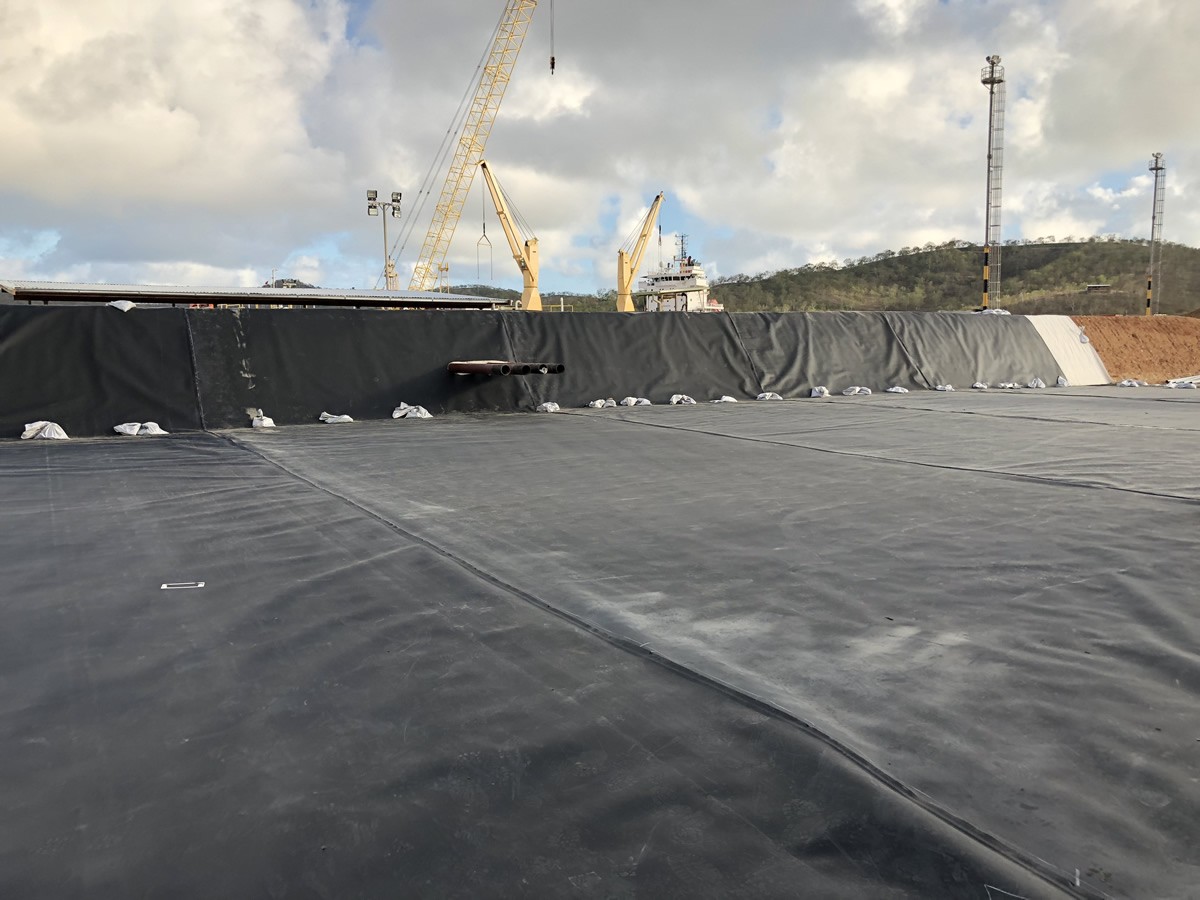
HDPE (High Density Polyethylene)
HDPE is the most widely used geomembrane liner in New Zealand, and for good reason. It has outstanding chemical resistance, strong UV stability, and excellent tensile properties. Polyethylene liners have been used in New Zealand since 1964 and have a projected service life of more than 150 years. Available in smooth or textured finish and in a range of thicknesses to suit the application.
Typical applications: effluent ponds, water storage, landfill liners, secondary containment, gas barriers.
LLDPE (Linear Low Density Polyethylene)
LLDPE shares many of the same properties as HDPE but has significantly higher elongation. That flexibility makes it well suited to sites where differential settlement is expected, such as soft or variable subgrades. It conforms more readily to surface irregularities without compromising the integrity of the liner system.
Typical applications: soft subgrade sites, differential settlement areas, complex geometries.
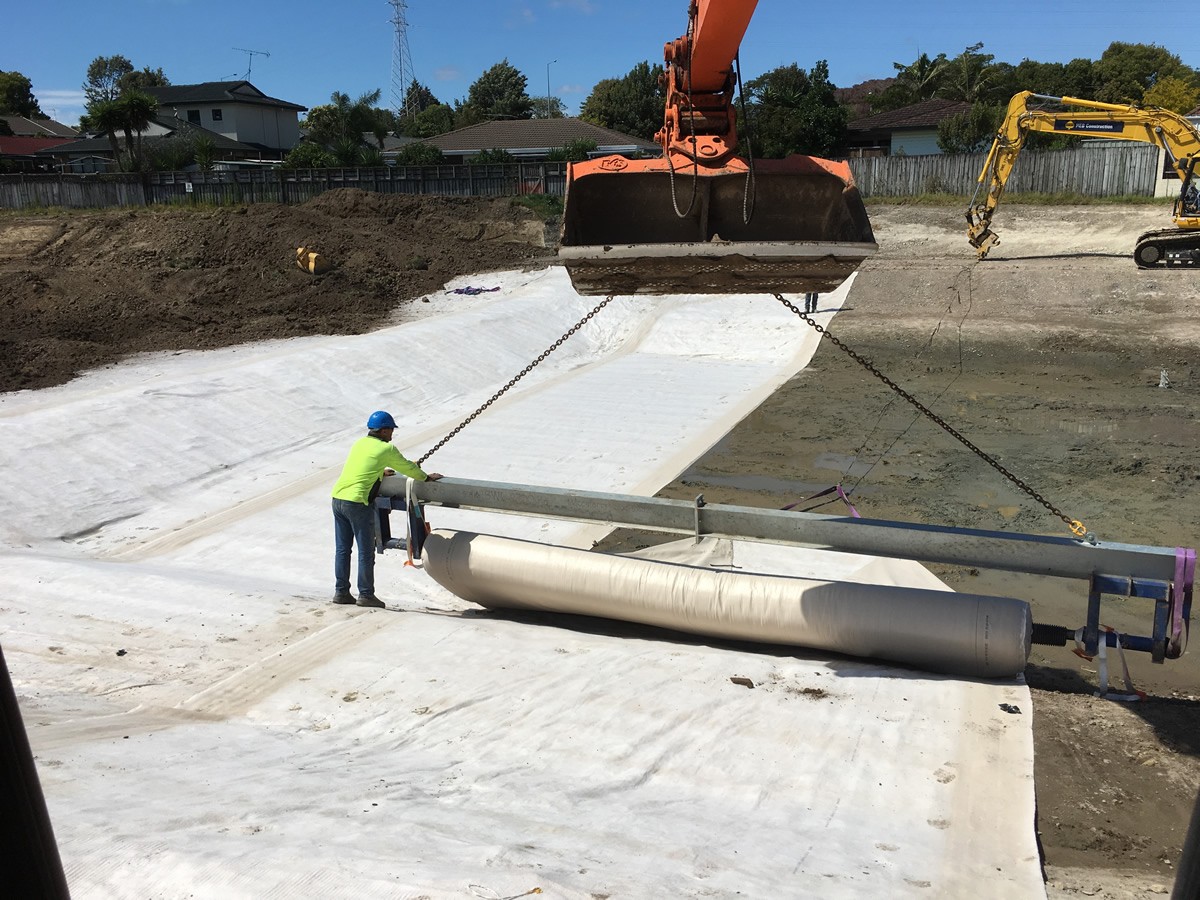
Geotextiles (Bidim)
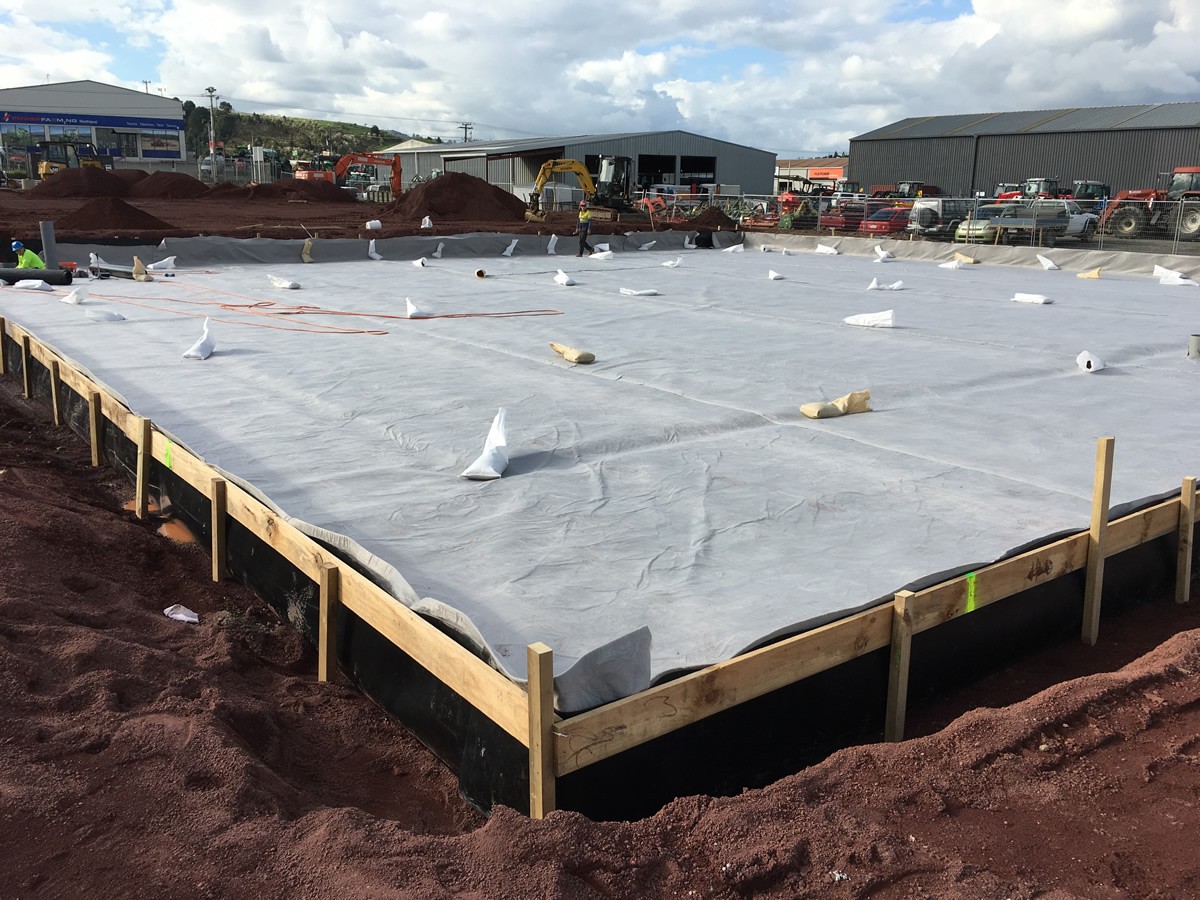
Geotextiles are used as a protective layer placed either beneath or above the geomembrane. Beneath the liner, they cushion against puncture on rough or rocky subgrades. Above, they protect the membrane when cover materials are placed on top. Available in a range of thicknesses to suit the conditions on site.
Typical applications: subgrade protection, cover layer protection, composite lining systems.
GCL (Geosynthetic Clay Liner)
GCLs use a layer of sodium bentonite clay needle-punched between two geotextiles, creating an exceptionally strong hydraulic barrier. Installation requires overlapping panels rather than welding, which reduces labour and simplifies quality assurance. The result is a cost-effective lining system suited to applications where a low-permeability barrier is required without the complexity of welded seams.
Typical applications: hydraulic barriers, landfill caps, composite systems.
Polylock
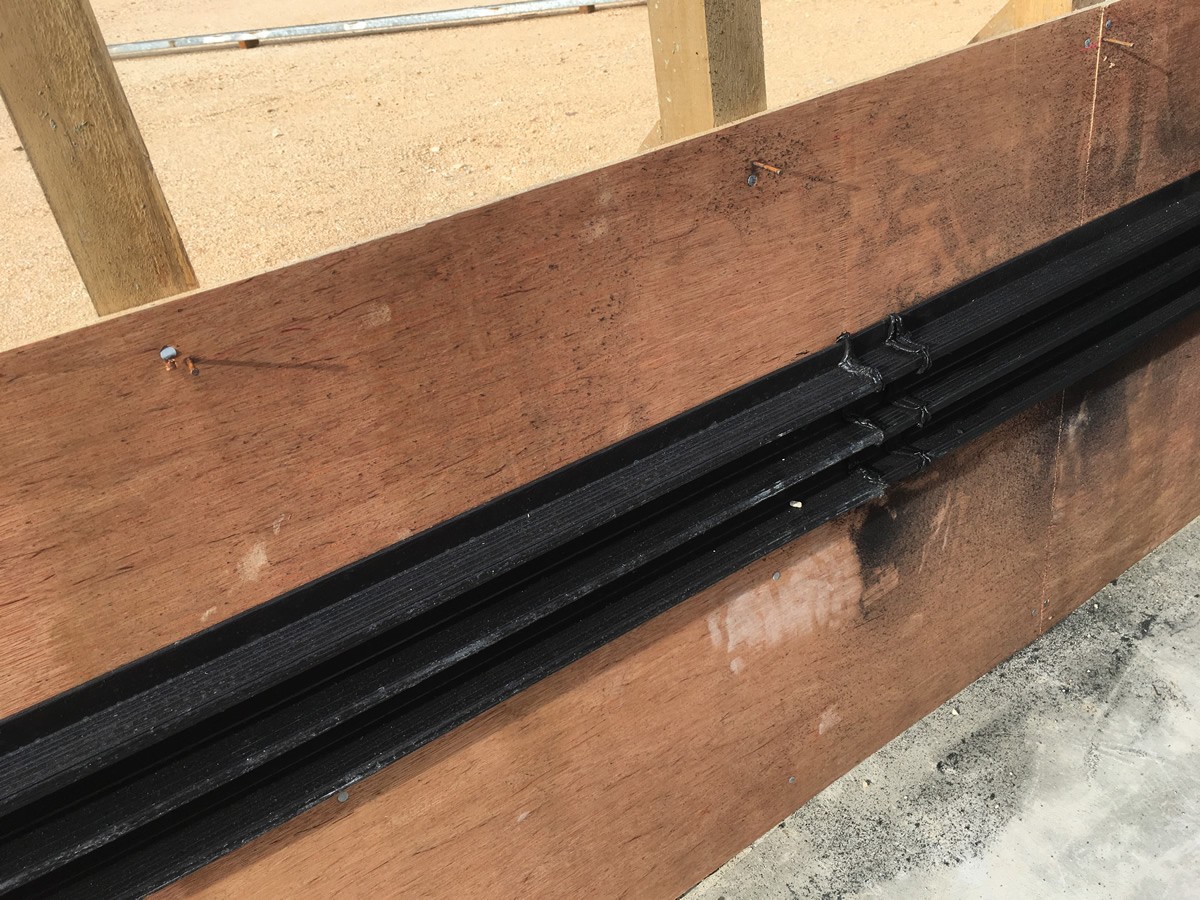
Polylock is an HDPE strip insert designed to be cast directly into concrete during construction. The strips form a continuous loop or attachment point, and the geomembrane is then welded to them to create a sealed connection between the liner and the concrete structure. It removes the need for mechanical fixings at the concrete interface and produces a clean, durable seal.
Typical applications: concrete tank lining, structural connections, bunded systems.
Unsure which system suits your project? We are happy to talk through the options. Most enquiries get a straight answer within a day.